Beyond Carbon: Montana grassland biodiversity with Princeton Hydro
Aug 11th, 2026|5 min read


Sean Leslie
(Big thanks to Princeton Hydro's Mike McGraw, Tanya Dapkey, and Eric Zawatski for providing photos and information for the species listed in this post!)
When we think about nature-based solutions, carbon sequestration often steals the spotlight. But carbon is only one part of a much larger story.
At Cultivo, we believe that restoring grasslands goes far beyond storing carbon underground; it’s about rebuilding complete, living ecosystems. True regenerative progress is measured in on-the-ground ecological health, and one vital metric of that health is biodiversity. Ecosystems rich in plant, bird, and insect life are proven to be more productive, more resilient, and better equipped to thrive.
And just as we do when measuring and verifying sequestered carbon, to ensure our projects deliver measurable, lasting benefits in terms of biodiversity, we’re not relying on satellite images or computer models; we’re putting boots on the ground.
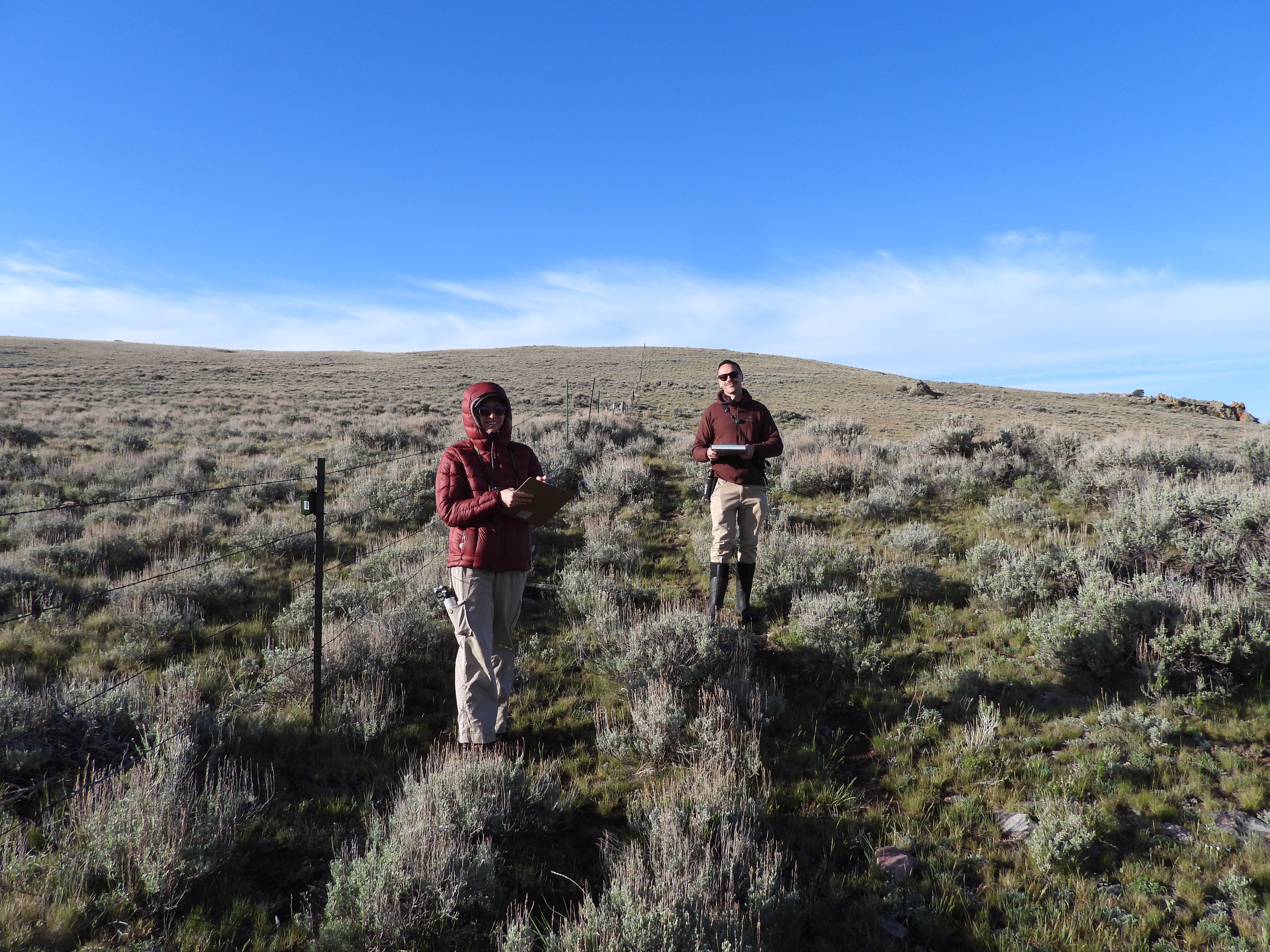
Case in point: Cultivo’s Ecological Impact Senior Manager, Emiline Koopman, recently completed an intensive field visit to one of our partner sites in beautiful Southwest Montana. Alongside the expert field team at Princeton Hydro, she implemented our Biodiversity and Ecosystem Services (BES) monitoring framework across the landscape.
Boots on the Ground: Why Field Visits Matter
Virtual meetings and digital mapping are great for planning, but nothing replaces walking the land. And during the early summer pilot sampling campaign, Cultivo and Princeton Hydro did exactly that, deploying a full suite of monitoring techniques:
- Acoustic Recording Units (ARUs) and Bird Point Counts
To monitor avian diversity, small weatherproof audio recording devices called Acoustic Recording Units (ARUs) are placed across the property to capture the natural soundscape – including bird calls – continuously over the summer breeding season. At the same time, ornithologists perform human “point counts” by standing quietly in one place for set time intervals with binoculars and clipboards to visually and auditorily record every species seen or heard. Together, these techniques provide a picture of species presence, relative abundance, and spatial distribution, acting as an indicator of overall habitat health.
- Vegetation Transects
Measuring plant health and structure, requires laying long measuring tapes across the ground through a specific habitat type and placing square frames (quadrats) at fixed increments along the line. Along this path, researchers systematically count live and dead woody plant stems, measure canopy gaps, and catalog every plant species inside the quadrats, providing detailed ground-level data on plant species richness, ground cover, and pasture resilience.
- Malaise Traps and Flower Visitation Observations
Insect populations are tracked and measured with Malaise traps, which resemble small, open-sided mesh tents with a collection jar at the top. Flying insects naturally bump into the traps’ fabric walls, fly upward, and are gathered for identification using conventional and eDNA metabarcoding techniques. To complement this, researchers also sit quietly near blooming native plants for timed intervals to perform insect flower visitation counts, tracking specific pollinators including bees, ants, and wasps.
Meet the locals: Wildlife of Southwest Montana’s Grasslands
One of the greatest rewards of field work is seeing firsthand what we are working so hard to protect. In Southern Montana, the team encountered an incredible array of flora and fauna.
Here are a few of the standout species that call this ecosystem home, with pictures taken during the recent field visit:
1. Spearleaf stonecrop and Rocky Mountain parnassian
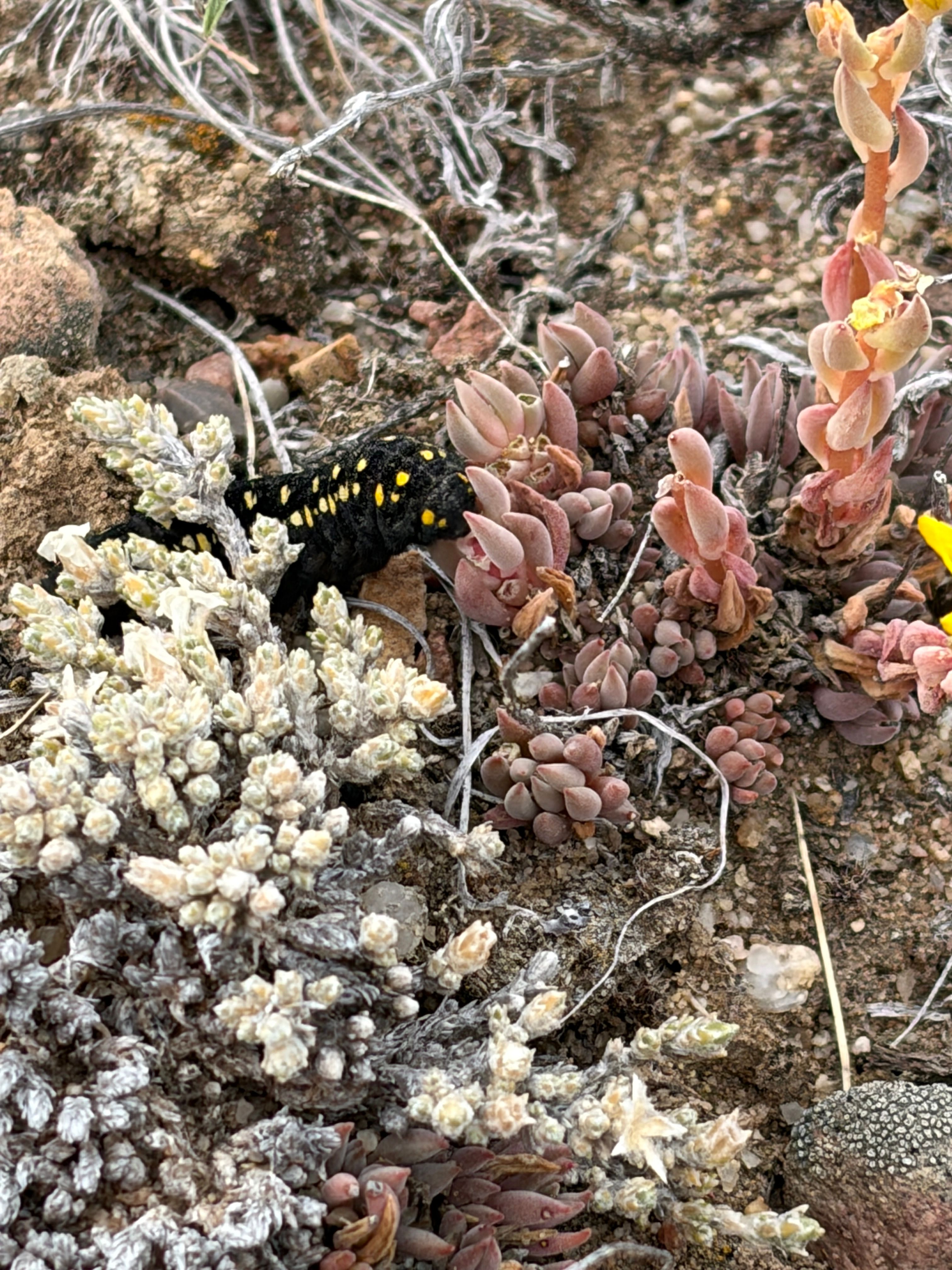
Spearleaf stonecrop and Rocky Mountain parnassian. Photo Credit: Tanya Dapkey, Princeton Hydro
On the high-elevation rangelands of Southwestern Montana, small native plants punch well above their weight. Among them, Spearleaf stonecrop (Sedum lanceolatum) is a tough, fleshy succulent that thrives in the rocky soils of our intermontane sagebrush valleys.
It also happens to be the exclusive host plant for the Rocky Mountain parnassian (Parnassius smintheus), a high-altitude cousin in the swallowtail family. Female parnassians lay their eggs right next to stonecrop patches so hungry spring caterpillars can feed on the leaves. As they eat, the larvae absorb bitter chemicals from the plant, making both the caterpillars and the red-spotted adult butterflies completely unpalatable to birds, a classic example of the invisible, delicate connections that make these high-desert ecosystems work.
2. Brewer’s sparrow
If any bird defines the vast sagebrush country of Southwestern Montana, it’s the Brewer’s sparrow (Spizella breweri). This small, inconspicuously plumaged songbird is intricately tied to healthy, intact rangelands.
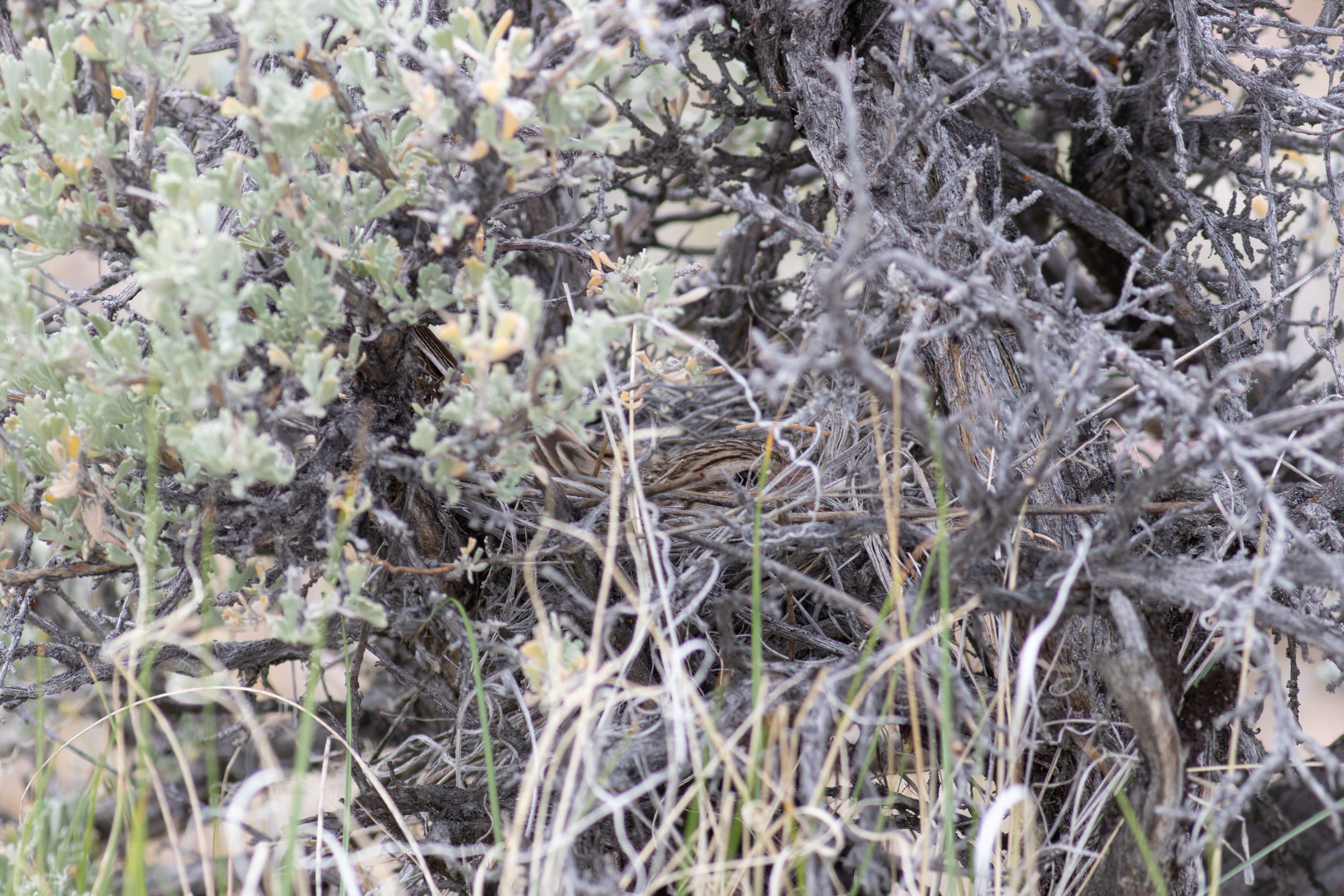
Brewer’s sparrows are sagebrush obligates, meaning they rely almost entirely on big sagebrush ecosystems for nesting, shelter, and feeding on insects and seeds. Their dull, streaked feathers provide perfect camouflage against native shrub leaves, while their long, breathy, trilling songs are a signature sound of spring on the range. Because they depend so heavily on large, unfragmented landscapes, healthy populations of Brewer’s sparrows are a key indicator of a thriving, well-managed rangeland ecosystem.
3. Thick-billed longspur
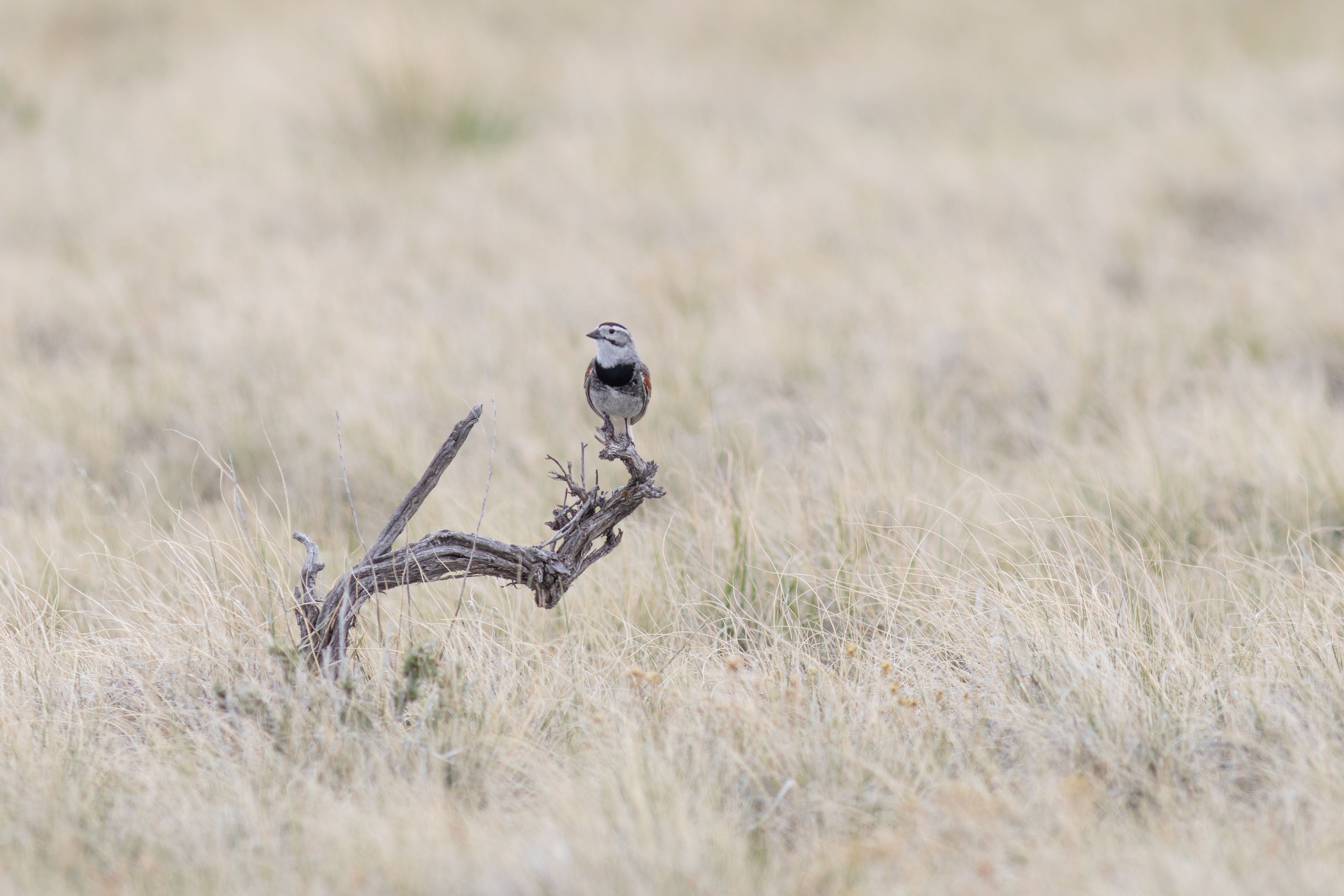
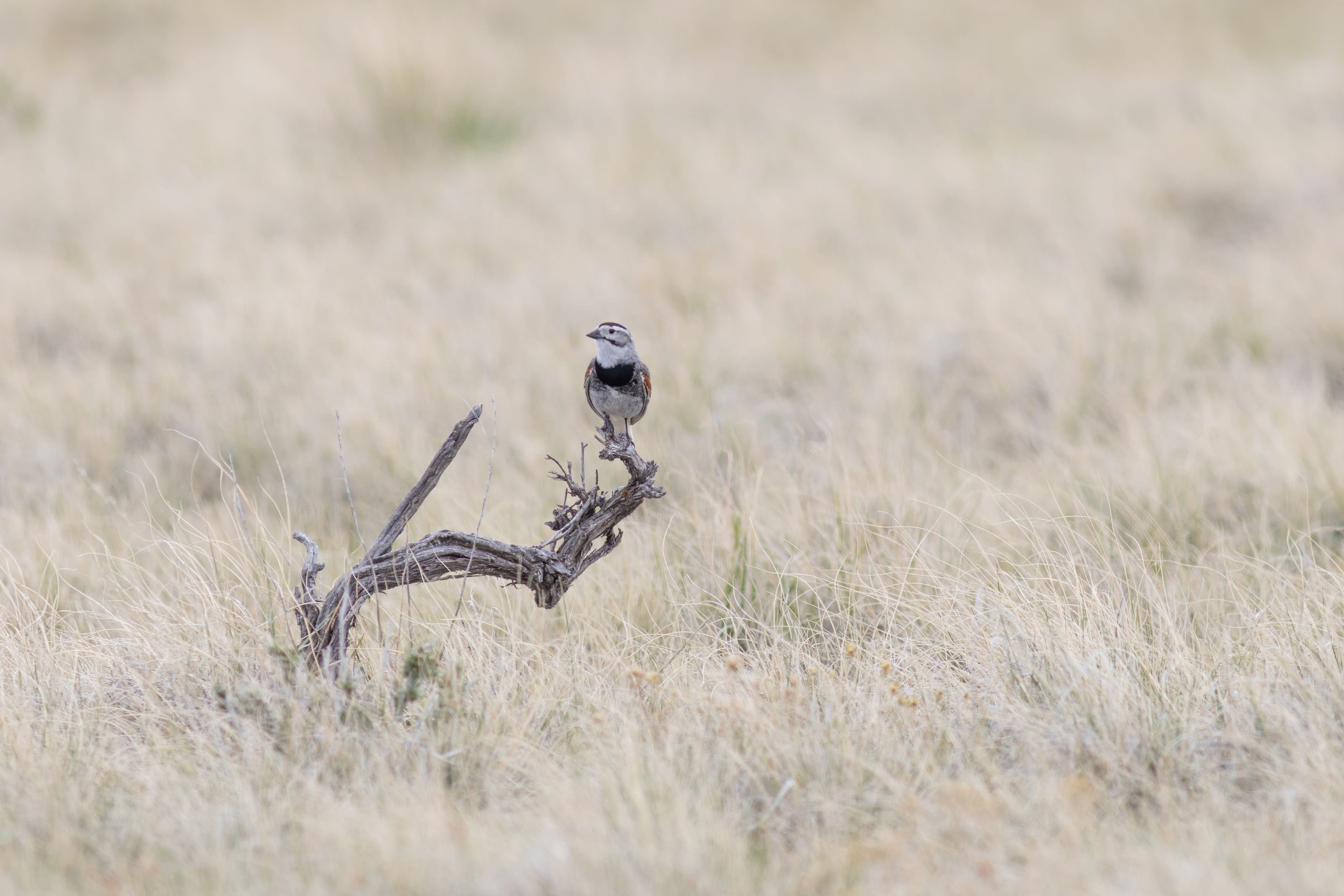
Thick-billed longspur. Photo credit: Eric Zawatski, Princeton Hydro
Where short prairie grasses like blue grama and buffalo grass break up the sagebrush valley, you’ll find the thick-billed longspur (Rhynchophanes mccowni). This species relies heavily on grazing to keep vegetation low; without livestock or bison disturbing the grass, their nesting habitat disappears.
On their breeding grounds, they feed heavily on protein-rich grasshoppers. During springtime, males perform incredible aerial courtship displays: They fly up to 30 feet in the air and "parachute" back down on outstretched wings with their white tail feathers spread wide, singing a warbling song to impress females and mark their territory.
4. Pronghorn
Pronghorn (Antilocapra americana) are gorgeous, iconic fixtures of Southwestern Montana's open valleys. While commonly referred to as "pronghorn antelope," they aren't true antelopes at all; their closest living relatives are actually the African giraffes and okapis.
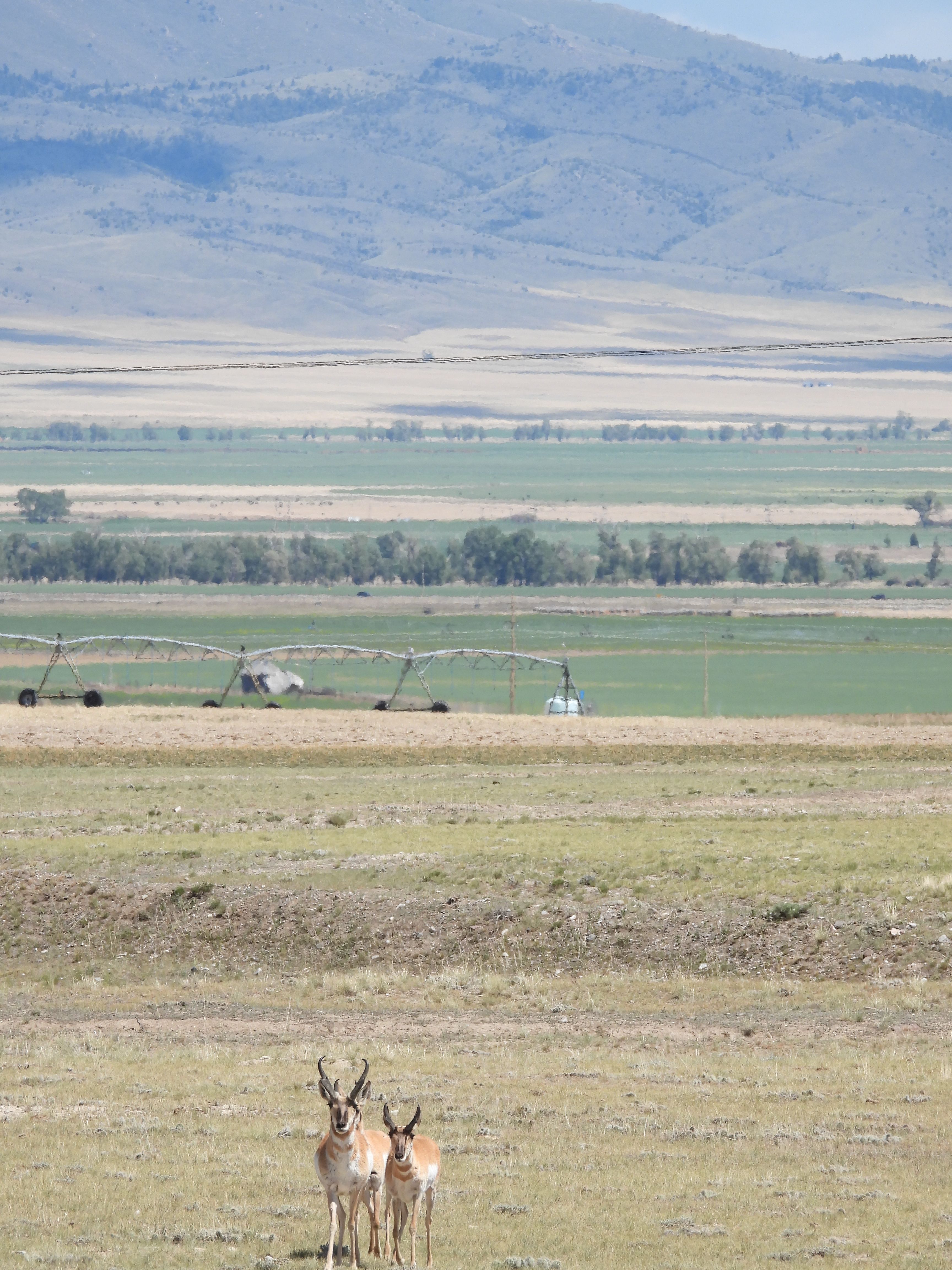
Built purely for acceleration and endurance, pronghorn are the fastest land mammals in the Western Hemisphere, topping out at speeds over 55mph, with this extreme speed attributed to a prehistoric evolutionary "arms race" with the now-extinct American cheetah (Miracinonyx). While modern wolves and coyotes can't come close to matching a pronghorn's pace today, these remarkable animals retain their incredible speed and massive heart-and-lung capacity, allowing them to cruise effortlessly across open rangelands.
5. Burrowing Owl
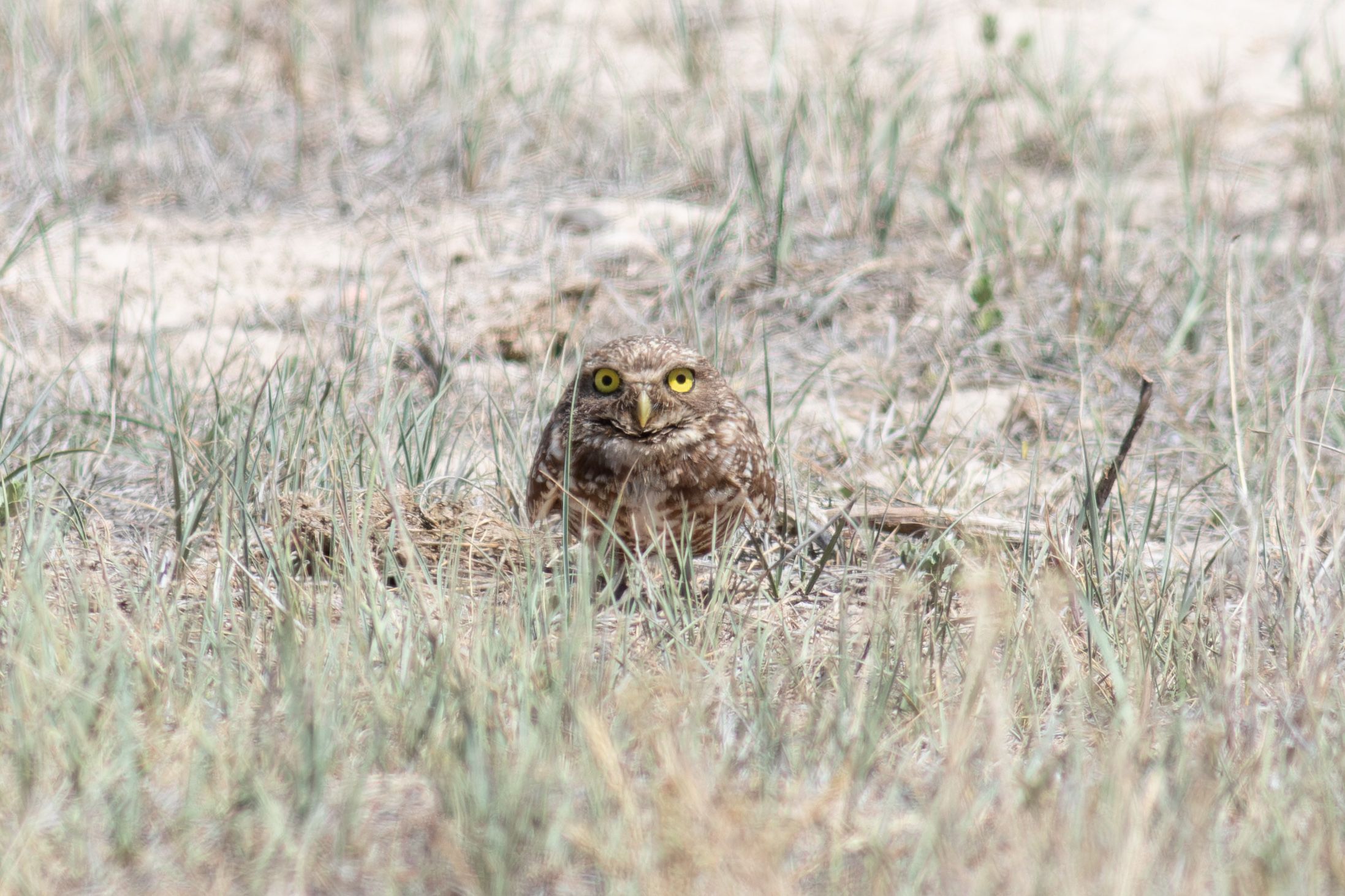
Burrowing owl. Photo credit: Eric Zawatski, Princeton Hydro
Small, long-legged, and undeniably cute, the burrowing owl (Athene cunicularia) is one of the range's most charismatic residents. Unlike most owls, these birds are diurnal, meaning they are active during the day and can often be spotted standing guard on fence posts or mounds.
Burrowing owls have a fascinating relationship with prairie dogs and other underground mammals; because the owls can't dig their own homes, they rely entirely on abandoned burrows for nesting and shelter. These opportunistic hunters eat a wide-ranging diet that includes insects, small mammals, lizards, snakes, and birds. Highly sensitive to habitat loss, their presence is a great sign of an intact, biodiverse grassland.
Collaborative Conservation in a Working Landscape
Ranching landscapes are complex, working environments. During the visit, the team noted that this ecosystem is facing real-world challenges, including severe ongoing regional drought and water access issues. This is where our work regenerating the landscape becomes crucial; by combining rotational grazing strategies with targeted infrastructure improvements, we can significantly boost soil health, turning vulnerable land into a thriving, resilient ecosystem.
According to the Natural Resources Conservation Service (NRCS), every 1% increase in soil organic matter lets an acre of land hold roughly 20,000 gallons of extra water. That moisture doesn't just keep pastures green longer during a dry spell, it also helps safeguard the land against wildfires. As research from the USDA and fire ecology experts shows, soils rich in organic matter maintain higher plant moisture levels and soil humidity, creating a natural firebreak that slows down fire spread and helps landscapes bounce back faster if a burn does occur.
Hand-in-hand with our landscape restoration work, the ranch is actively participating in a broader ecological monitoring network, with ongoing research from local university programs and regional partnerships. Cultivo is actively working to coordinate with these existing initiatives, synthesizing data and supporting local land stewards.
By pairing high-tech monitoring tools, on-the-ground data collection, and deep, generational knowledge of local ranchers, we can build restoration strategies that support both wildlife and agricultural livelihoods.
Looking Ahead
Implementing our Biodiversity and Ecosystem Services framework in Montana reminds us exactly why we do this work: to accelerate investment into nature and regenerate the world’s land into healthy, resilient ecosystems.
As we refine our field protocols and analyze the baseline data gathered in Montana, we move one step closer to scaling transparent, high-integrity nature restoration worldwide.
Stay tuned for more field updates as we continue monitoring biodiversity across our global project portfolio!